Chicken Road / Chicken Road 2 Combat Rhythm: How Small-Bankroll Players Avoid Quick Busts
GamePK Editor · · 13 views

Playing Chicken Road or Chicken Road 2 on a tight budget? Discover a grounded, low-stake strategy focusing on smart bankroll management, difficulty modes, and disciplined cash-out rhythms to help you avoid fast busts and stay in control.
Crash-style instant games like Chicken Road and Chicken Road 2 have gained huge popularity thanks to their straightforward gameplay and fast-paced tension. The core loop is simple: you help a chicken cross a multi-lane road or track step by step. Every successful step increases your total multiplier. However, a single collision ends the round instantly, costing you your entire stake. The game leaves the most critical decision entirely in your hands—when to cash out.

For players starting with a small bankroll, this freedom is a double-edged sword. While low-stake play allows you to enjoy the thrill without risking big money, small balances are exceptionally fragile. One bad streak can wipe out your funds before you even get a rhythm going.
This guide isn't about magical formulas or guaranteed win tricks—because those don't exist. Instead, we'll break down the game's mechanics, highlight common pitfalls, and share a grounded cash-management rhythm to help small-bankroll players survive longer and play more responsibly.
Quick Recap: Core Game Mechanics & Difficulty Modes
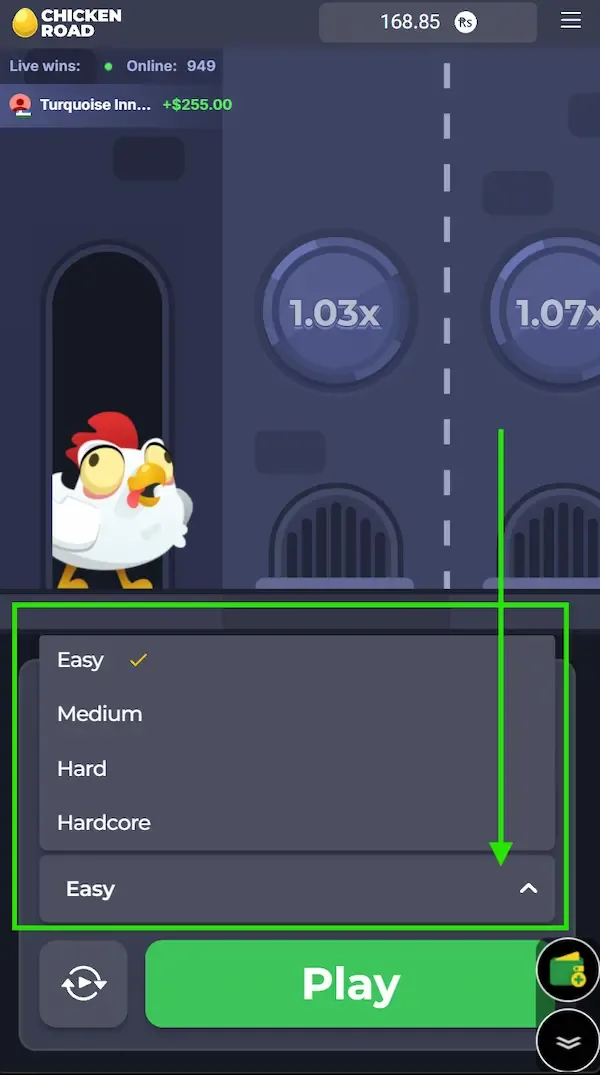
In both Chicken Road and Chicken Road 2, your potential payout depends heavily on the chosen difficulty level. Understanding how these modes affect volatility is step zero for protecting your cash.
- Easy: Has the lowest chance of collision per step. Multiplication builds slowly, but survival rates over the first few lanes are relatively high.
- Medium: Offers a balanced step-by-step risk curve, catering to standard crash-game strategy.
- Hard: Noticeably higher hazard frequency. Multipliers jump faster, but early-round busts happen frequently.
- Hardcore: Extreme volatility. High risk with steep multiplier scaling. A single mistake early on is standard here.
For a small balance, higher difficulty modes exponentially increase variance, making quick busts almost guaranteed over short sessions.
Common Reasons Small Bankrolls Bust Fast
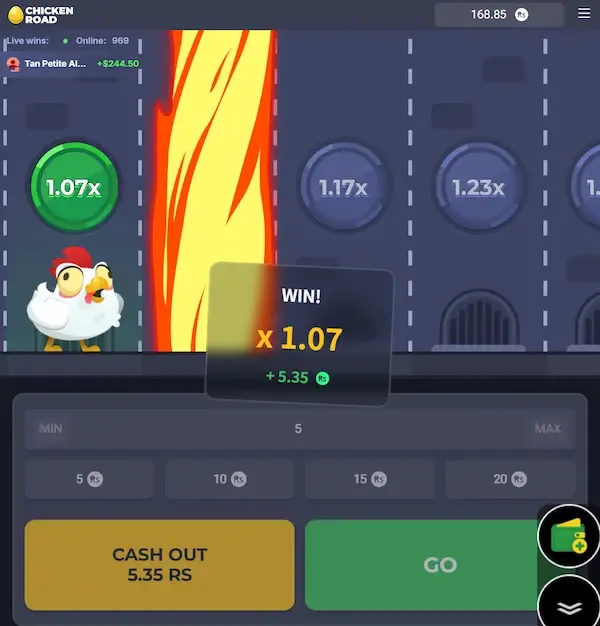
If you've ever seen a small balance vanish in under ten minutes, one (or all) of these three habits was likely at fault:
Oversized Stakes Relative to Balance
Betting 10% or 20% of your total balance on a single step leaves no cushion for standard mathematical variance. Losing 3 or 4 rounds back-to-back—which is completely normal in crash games—eliminates your entire bankroll immediately.
Greed and Multiplier Chasing
Watching the multiplier climb creates intense pressure to stay in the game for "just one more lane." Chasing 10x or 50x hits on a small wallet usually leads to watching your accumulated profit vanish right before your eyes.
Martingale & Revenge Betting
Increasing your bet size after a loss to "recover fast" is the single fastest way to clear out a small account. A short sequence of unfavorable outcomes will quickly push your required next bet above your remaining balance.
Practical Combat Rhythm & Money Management
To keep your small session alive and controlled, rely on structured bankroll habits rather than gut feelings.
Stake Sizing: The 1% to 2% Rule
Never risk a large portion of your funds on one attempt.
- Ideal Stake: Keep each single bet between 1% and 2% of your total starting bankroll.
- Example: If your total balance for the session is 200RS, your base stake should strictly be 5RS to 10RS per attempt. This gives you a buffer of 50 to 100 rounds, giving math time to balance out without early termination.
Recommended Mode Progression
If you are new or managing a tight balance, stick to a step-up approach
- Start in Easy Mode: Get a feel for the step rhythm, cash-out response time, and variance without heavy risk.
- Graduate to Medium Mode (Optional): Only move up once your balance has built a slight cushion above your initial deposit.
- Avoid Hard / Hardcore: Treat extreme modes as off-limits for small-bankroll survival strategies.
Smart Cash-Out Strategies
Instead of letting rounds run indefinitely, pick a structured cash-out plan before hitting start:
- Fixed Low-Multiplier Cash-Out (1.2x – 1.5x): Take quick, small steps and exit early. While individual payouts are smaller, consistency helps maintain your balance stability.
- Two-Step Rule: Set a strict limit (e.g., cash out after 2 successful steps, regardless of multiplier). Taking early profit consistently prevents late-lane crashes.
- Partial Extraction Rhythm: If you hit a comfortable win, immediately secure your initial stake and play strictly with accumulated profits for subsequent rounds.
Setting Enforced Stop-Loss and Stop-Profit Limits
A disciplined player always enters a session with clear exit numbers:
- Stop-Loss (Daily/Session): Cap your total maximum loss at 30% to 50% of your session allowance. If you lose this set amount, walk away immediately. Do not attempt to recover it in the same sitting.
- Stop-Profit (Session Target): Decide on a realistic goal, such as a 20% to 30% gain on your starting balance. Once reached, log off or cash out your winnings. Expecting a small balance to double or triple in a single sitting is an easy path to losing it all.
A Necessary Reality Check
It is vital to understand that no strategy, pattern-tracking, or bankroll system can guarantee long-term wins or prevent busts.
Crash games like Chicken Road run on mathematical house edges and Random Number Generators (RNG). Every round is entirely independent, and probability remains tilted toward the platform over time. Bankroll management is strictly a tool to control your spending velocity and avoid emotional decision-making—it does not eliminate risk.
Summary & Gaming Note
Playing Chicken Road or Chicken Road 2 with a small budget can be entertaining if approached with patience and clear boundary controls. Keep your stakes small, target lower multipliers, stick to lower difficulty modes, and walk away as soon as you hit your predefined limits.
Gaming Note: Gambling involves real financial risk and can be addictive. Please participate rationally and only spend money you can afford to lose. If you cannot afford to lose it, do not play. Never treat gaming as a source of income or a solution to financial difficulties.