Crash Games: Stop Chasing High Multipliers — These 3 Rules Are Far More Useful
GamePK Editor · · 2 views
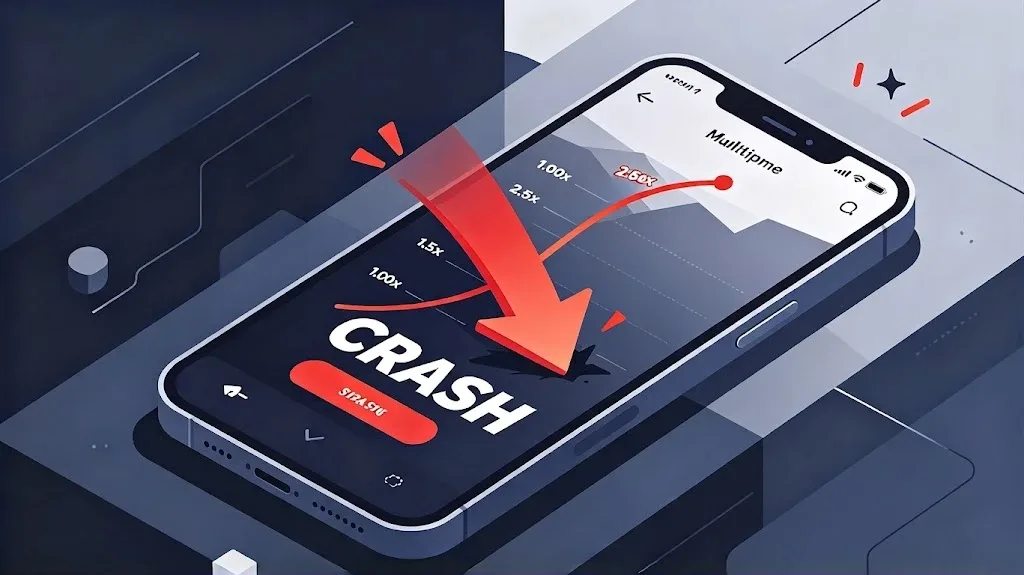
Most Crash players lose money the same way: they see a 50x or 100x and start holding longer. The game is random, the house has the edge, and chasing high multipliers only speeds up the losses. This article breaks down three practical rules that actually help — fixed low targets, strict bankroll limits, and knowing when to stop. They won’t make you profitable. They just help you lose slower and with less regret.
Most players lose money in Crash games for one simple reason: they chase high multipliers.
You see a screenshot of someone cashing out at 50x or 100x. The chat fills with “unbelievable” comments. Your next few rounds suddenly feel boring at 1.5x or 2x. So you hold longer. Then longer. Then the rocket crashes at 1.8x while you were waiting for 20x. The loss hits harder than usual, and the cycle begins.
That pattern is extremely common. It is also one of the fastest ways to burn through a bankroll.
What Crash Games Actually Are
In Crash-style games a multiplier starts at 1.00x and rises. At a random moment the round “crashes” and anyone still in loses their stake. You can cash out at any time before the crash and lock in the current multiplier.
The outcome of every round is random. The house builds in an edge — usually through the probability distribution of the crash point. Over a large number of rounds the expected value for the player is negative. No system changes that mathematical fact.
The only practical question left is how to lose more slowly and with less emotional damage.
Rule 1: Fixed Target Multiplier + Strict Execution
Chasing high multipliers feels exciting because the rare big wins create strong memories. The far more frequent small crashes do not stick in the mind the same way. The result is a skewed perception of what “normal” looks like.
A fixed, modest target removes most of that distortion.
Why it helps
Low fixed targets (commonly in the 1.3x–2.0x range) cash out more often. That reduces the number of total-loss rounds and keeps the bankroll curve less violent. Fewer violent swings mean fewer emotional decisions.
How to apply it
- Decide a single target before the session starts — for example 1.5x or 1.8x.
- Cash out at that exact number every single time. No exceptions because “it looks like it might go higher.”
- Never raise the target mid-session because you just saw a 30x.
Limitations
You will still lose money over time. A string of crashes below your target will still empty the account. The rule only reduces the speed and the psychological pain of the decline. It does not create an edge.
Rule 2: Strict Session and Daily Money Rules
Without hard limits, one bad streak or one emotional chase can wipe out days or weeks of careful play.
Why it helps
Position size and stop lines turn abstract risk into concrete numbers. When the numbers are written down in advance, it becomes harder to justify “just one more round” after a loss.
Practical settings many disciplined players use
- Risk only 1–2 % of the total bankroll on any single round.
- Set a daily loss limit (for example 10–15 % of the starting bankroll for that day). When it is hit, stop.
- Set a daily profit target (for example 10–20 %). When it is reached, also stop.
- Never increase stake size after a loss in an attempt to recover.
Limitations
These percentages are not magic. A long enough losing streak will still hit the daily limit. The rules only force you to stop before the damage becomes catastrophic. They do not improve the underlying odds.
Rule 3: Emotion and Rhythm Control
Crash games are fast. The next round starts almost immediately. That speed is designed to keep you in the flow state where decisions become automatic rather than deliberate.
Why it helps
Most big losses happen after a player is already tilted — either from a recent big win that creates overconfidence or from a series of near-misses that create the urge to “get it back.” Recognizing the state and stepping away is more valuable than any multiplier rule.
Concrete habits
- After any loss larger than your normal stake, take a mandatory 10–15 minute break.
- After hitting either the daily loss limit or the daily profit target, close the app or tab completely. Do not reopen it “just to watch.”
- If you notice yourself thinking “I need to make it back tonight,” that is the signal to stop for the day.
- Never play when tired, angry, or after drinking.
Limitations
Self-control is imperfect. Everyone breaks their own rules occasionally. The point is to make the breaks and the limits habitual enough that the damage from those lapses stays smaller.
What These Three Rules Actually Deliver
They only help you lose more slowly and with less emotional chaos. They do not change the negative expected value of the game. Over a long enough period the house edge still extracts its share. Anyone claiming otherwise is either mistaken or selling something.
Final Notes
Gambling carries real financial risk. Crash games produce completely random outcomes; no strategy guarantees profit. If you cannot afford to lose the money, do not play. If you do play and happen to be ahead, withdraw the profit instead of leaving it in the account.
The players who last longest are usually the ones who accepted early that they are not going to beat the game, only manage the damage. Chasing the next 50x or 100x accelerates that damage. The three rules above slow it down. That is the most realistic outcome available.