Pakistan’s Record Chase in Tri-Series Final: What Local Bettors Can Learn from Fakhar & Minhas Heroics
GamePK Editor · · 4 views
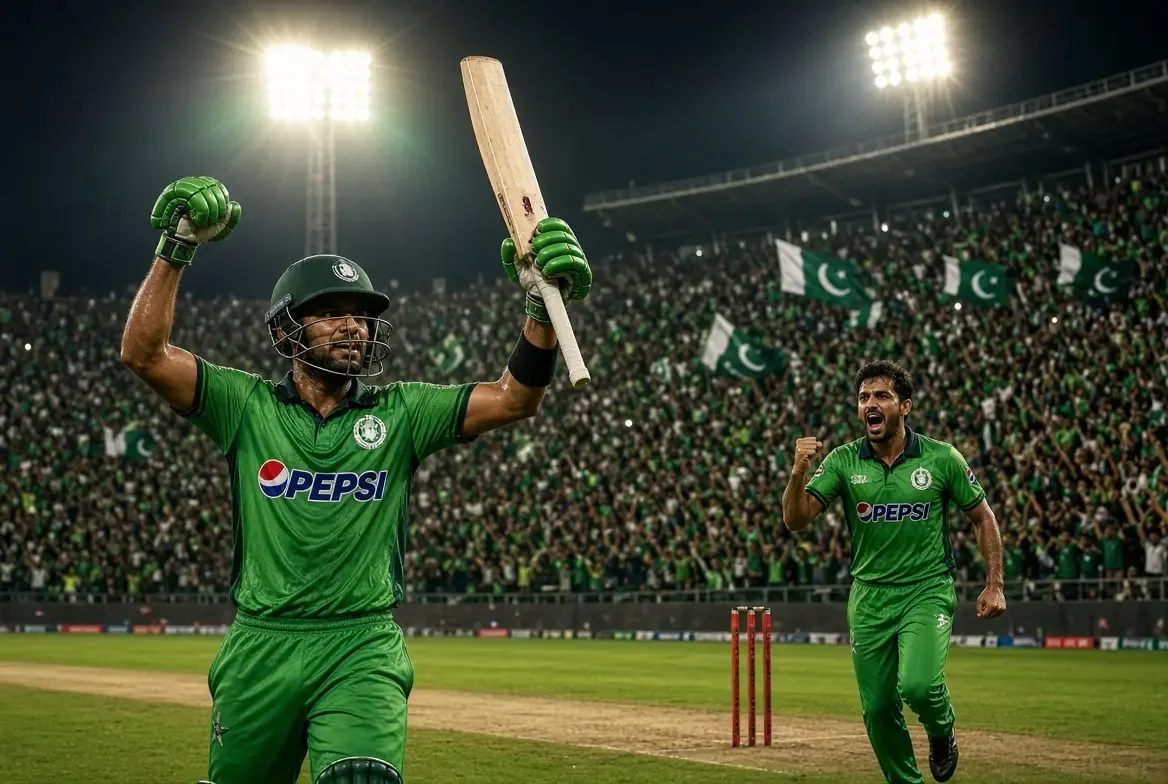
The Tri-Series final on 31 October 2026 at a packed Gaddafi Stadium still feels fresh. Pakistan chased 326 and finished on 331 for 7 in 48.3 overs, winning by three wickets with nine balls left. It was billed as one of the joint-highest successful chases in an ODI final. Fakhar Zaman’s 127 and Arafat Minhas’s 61 off 31 balls turned a tense night into celebration. Local fans and observers are still talking about the momentum swings, the early collapse, the dew, and the finishing kick.
That emotional high is exactly when judgment can slip. This piece is a process-focused review for readers who watched the game and now want a calmer framework for reading high-score chases. It is not betting advice. All forms of online gambling and betting remain illegal in Pakistan. The discussion here is limited to match analysis and observation of how momentum shifts. Treat it only as cricket content.
Match Key Moments: The 31 October Timeline
Sri Lanka batted first and posted 325 for 8. Kamindu Mendis scored a maiden ODI century of 131; Pavan Rathnayake added 77. Pakistan’s bowlers kept the total just short of a 340-plus total that would have been far harder under the lights.
Pakistan’s reply began badly. Maaz Sadaqat fell for 5 and Babar Azam for a five-ball duck. At 14 for 2 the home crowd of more than 31,000 went quiet. Fakhar Zaman, carrying a bruised knee and recent lean form (only 31 runs in his previous four innings), walked in with the chase already under pressure.
He and 19-year-old Saad Baig rebuilt. Their 149-run third-wicket stand took Pakistan past the halfway mark. Baig made a composed 74 off 75. Fakhar reached his fifty, then his 12th ODI hundred (off 84 balls). He finished with 127 off 99 balls (11 fours, six sixes) before Dilshan Madushanka bowled him in the 34th over. At that point Pakistan still needed 106.
Salman Agha added 17 before falling, leaving Pakistan 230 for 5 after 36.5 overs. The required rate was rising and the game sat on a knife-edge. Enter Arafat Minhas. He arrived needing 96 from 78 balls and immediately changed the tempo. With Hasan Nawaz (37 not out) he put on 94 for the sixth wicket. Minhas’s 61 came from just 31 deliveries and included three fours and four sixes. Dew made the ball harder to grip; boundaries started flowing again.
Late drama remained. Asitha Fernando dismissed Minhas and Faheem Ashraf in successive balls with Pakistan needing only two more. Captain Shaheen Shah Afridi then sealed it with a six over midwicket off Madushanka in the 49th over. Pakistan finished 331 for 7.
Key turning points were clear: the early 14 for 2 scare, the Fakhar-Baig recovery, Fakhar’s dismissal while still more than 100 short, the Minhas-Nawaz acceleration, and the final two-wicket burst that failed to stop the chase.
Fakhar Zaman’s Century and Arafat Minhas’s Impact on Momentum
Fakhar’s innings was classic high-pressure batting. He absorbed early pressure, survived drops (including multiple chances by Maheesh Theekshana), and accelerated once set. His strike rate climbed after the fifty; the sixes and boundaries kept the required rate manageable and lifted the crowd. When he left, the scoreboard still looked demanding, yet the platform existed. Without that 127 the later acceleration would have been far harder.
Minhas supplied the finishing power. Coming in at a point where many sides lose control, he attacked the right overs and forced the fielding side to react. The 94-run partnership with Nawaz flipped the pressure. Dew helped the ball skid, but the intent and power were decisive. Minhas turned a still-tense equation into a near-certainty before the late wickets created one final twist.
Together the two performances show how an individual contribution can shift perceived control. Fakhar stabilised and built; Minhas finished. High-score chases often hinge on exactly these phases—rebuild after early wickets, then a calculated acceleration when the required rate climbs.
How Momentum Shifts Appear in Broader Market Thinking
In any high-target chase, observers commonly watch several patterns of movement. Early wickets against a big total usually create the sense that the chasing side is behind. A long, steady partnership then gradually restores balance. A set batsman’s dismissal while the equation remains stiff can produce another period of uncertainty. A rapid middle- or lower-order partnership that takes the required rate down often produces the sharpest change in outlook. Late wickets with only a few runs needed can create short-lived drama without necessarily changing the final result.
These swings are visible in the way commentary, crowd reaction, and informal discussion move during the game. They reflect changing probabilities based on wickets in hand, overs remaining, and current run rate. Dew, pitch behaviour under lights, and bowling changes add further layers. The 31 October final followed this classic sequence almost textbook style: early crisis, long recovery, key departure still short of the target, explosive acceleration, late scare, decisive finish.
None of this requires looking at specific numbers or platforms. The value of the observation is simply recognising that momentum in a 300-plus chase is rarely linear. Long periods of apparent control can reverse quickly, and short bursts of aggression can decide the result.
A Practical Observation Framework for Local Viewers
Before the match
Note the conditions (day-night, expected dew, average scores at the venue), recent form of key batsmen and bowlers, and the nature of the total if the side batting first posts a big score. High totals create both opportunity and pressure; the chasing side needs at least one substantial partnership and one acceleration phase.
During the match
Track the score in phases rather than ball-by-ball emotion. After early wickets, watch for the rebuild. Once a set batsman is established, note the required rate versus current rate. When a key set player falls, reassess remaining resources. In the final ten to fifteen overs, watch for clear acceleration or collapse. Crowd energy and fielding intensity often mirror these shifts.
After the match
Review the actual timeline against the emotional memory. Which partnership really changed the game? Which dismissal created only temporary pressure? How much did conditions (dew, wet ball) assist the later batting? Separating the result from the process reduces the tendency to over-weight the final six or the last two wickets.This simple before-during-after habit replaces result-driven excitement with process-driven reading. It works for any high chase, not only this final.
Common Post-Match Emotional Traps
After a dramatic home win, several habits appear quickly. One is treating the successful chase as proof that any big total is chaseable. Another is focusing only on the heroics and forgetting the early 14 for 2 or the fact that Pakistan still needed more than 100 when Fakhar fell. A third is assuming the same lower-order power will appear every time. A fourth is letting the celebratory mood colour the next set of fixtures.
The remedy is deliberate process review. Write down the key overs and partnerships the morning after. Compare the actual required-rate path with the moments when the crowd or commentary grew loudest. That gap between emotion and timeline is where clearer judgment forms.
Risk and Compliance Reminder
All online gambling and sports betting remain illegal under Pakistani law. Participation carries legal risk as well as financial risk. No match analysis, however detailed, changes that position. This article exists solely as cricket commentary and observational framework. It does not encourage, endorse, or guide any form of wagering. Readers should treat the content as match review only.
Money set aside for entertainment is best kept for tickets, official merchandise, or legitimate cricket-related activities. Emotional highs after big wins are natural; turning them into decisions involving illegal activity is not.
Summary and Rational Next Steps
Pakistan’s successful chase of 326 on 31 October 2026 delivered a memorable Tri-Series title. Fakhar Zaman’s century provided the backbone; Arafat Minhas’s rapid 61 supplied the decisive acceleration. The match followed a classic high-score pattern: early crisis, long recovery, late surge, final twist.
Local observers can extract lasting value by studying those phases rather than the final score alone. Track rebuilds, note acceleration windows, and separate process from result. That habit improves reading of future chases without relying on emotion.
Celebrate the cricket. Keep any personal observations strictly within legal bounds. The game itself remains the point.